
Expert insight from Dr. Richard Cunningham, Orthopaedic Surgeon at Vail-Summit Orthopaedics & Neurosurgery
An ACL tear is one of the most common knee injuries among active individuals, particularly those who participate in skiing, soccer, basketball, and other sports involving sudden changes in direction. While treatment often focuses on repairing or reconstructing the injured ligament, the alignment of the knee can also play an important role in long-term outcomes.
For patients with bowed knees or knock knees, the way weight is distributed across the knee joint may influence ligament stress, joint stability, and the success of ACL reconstruction surgery.
It is important for the surgeon to evaluate and consider lower extremity alignment in the setting of an ACL tear in order to choose the best surgical treatment in order to have the best possible outcome.
Quick Takeaways
- Knee alignment influences how forces are distributed across the joint during movement.
- Bowed or knock-kneed alignment can place additional stress on certain structures within the knee.
- Significant alignment abnormalities may contribute to instability or affect ACL reconstruction outcomes.
- Not every patient with a bowed leg or knock knees requires corrective treatment.
- A comprehensive evaluation helps determine the most appropriate approach to restoring knee stability and function.
How Knee Alignment Affects ACL Injuries
Proper knee alignment allows weight and forces to be distributed efficiently through the joint. When the legs are relatively straight, the hip, knee, and ankle generally work together to absorb impact and support movement.
However, variations in alignment can change how these forces are distributed.
Two common alignment patterns include:
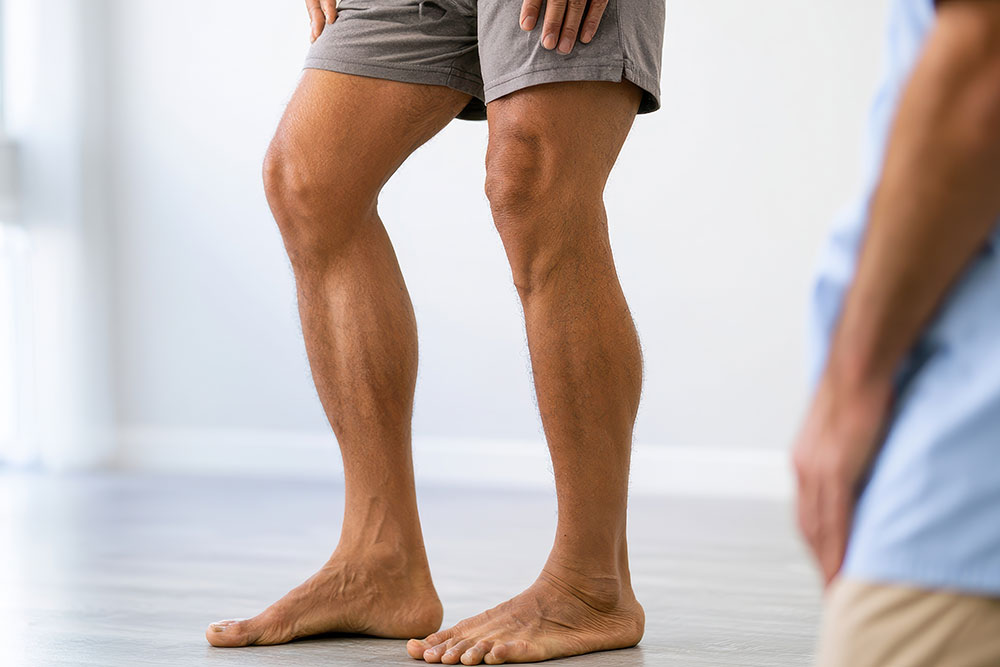
- Varus alignment (bowlegged): The knees angle outward, increasing the load on the inner portion of the knee and medial meniscus.
- Valgus alignment (knock-kneed): The knees angle inward, potentially changing the forces experienced by the ligaments, the lateral meniscus, and the surrounding structures.
While these variations do not automatically cause ACL injuries, they can influence knee mechanics, particularly during high-impact activities or sudden changes in direction.
For athletes who have experienced an ACL injury, understanding these mechanical factors can be an important part of developing an effective treatment plan.
Do Bowed Knees Increase the Risk of ACL Problems?
Patients with bowed knees often place more weight on the inner, or medial, compartment of the knee. Over time, this uneven distribution can contribute to medial meniscus tears, articular cartilage wear, and changes in joint mechanics.
In certain patients, particularly those with significant varus alignment and associated ligament instability, these forces may also place additional stress on an ACL graft following reconstruction.
A patient with a bowed leg may not experience symptoms related to alignment alone. However, when an ACL injury occurs alongside substantial bowing, the surgeon may need to evaluate whether the underlying alignment could affect long-term stability of the knee after ACL reconstruction surgery.
This is particularly important for patients who have experienced repeated ACL injuries and previous reconstruction failure or have had a significant portion of their medial meniscus removed in a prior surgery.
What About Knock Knees?
Knock knees, also known as genu valgum, occur when the knees angle inward toward one another.
This alignment can influence how the knee moves during running, jumping, landing, and cutting movements.
It is important to distinguish between structural alignment and dynamic knee valgus, which occurs when the knee collapses inward during movement.
Dynamic knee valgus has been associated with movement patterns that may increase ACL injury risk, particularly in sports involving jumping and rapid changes in direction. However, having knock knees does not necessarily mean an individual will experience an ACL injury.
Strength, hip stability, and landing mechanics all contribute to how the knee responds to athletic activity.
For patients recovering from an ACL injury, rehabilitation often focuses on improving gluteal and core strength to support safer movement and reduce unnecessary stress on the knee.
Why Assessing Lower Extremity Alignment Matters Before Surgery
When evaluating an ACL injury, the surgeon needs to consider more than the ACL itself.
A comprehensive examination may include:
- Reviewing previous knee injuries or surgeries
- Examining walking patterns and functional movement
- Assessing overall leg alignment and knee stability on physical exam
- Evaluating associated meniscus or cartilage injuries
- Obtaining standing alignment X-rays when indicated
Understanding ACL tear alignment can be especially important for patients with chronic instability, significant structural abnormalities, or a history of failed ACL reconstruction surgeries.
In select cases, correcting a substantial alignment problem by performing an osteotomy may help protect the reconstructed ACL and improve the mechanical environment of the knee.
However, most patients undergoing ACL reconstruction do not require an additional alignment procedure.
Can Knee Alignment Be Corrected?
For patients with significant structural alignment abnormalities, a procedure called an osteotomy may occasionally be recommended.
An osteotomy involves carefully cutting and repositioning bone to improve the mechanical alignment of the leg.
Depending on the patient’s anatomy and injury, this procedure may be performed separately or in conjunction with ligament reconstruction.
For example, a patient with a significantly bowed leg, chronic ACL instability, and additional medial meniscus damage may benefit from correcting a high tibial osteotomy in order to take the knee from a bowed alignment to a neutral or even slightly knock kneed alignment.
These procedures are reserved for carefully selected patients and are not routinely done for individuals with mild alignment abnormalities.
Choosing the Right Surgeon Matters
ACL injuries are not always isolated ligament tears. Meniscus damage, cartilage injuries, additional ligament instability, and structural alignment differences can all influence treatment decisions.
An experienced knee surgeon can evaluate these factors to develop an individualized treatment plan.
For patients with complex injuries or previous ACL reconstruction failures, a thorough assessment of lower extremity alignment may help identify mechanical issues that could have predisposed the prior ACL surgery to have failed.
The goal is not simply to reconstruct the torn ACL, but to improve overall knee stability, protect the joint, and support long-term function.
Looking Ahead
Knee alignment is one of several important factors that can influence ACL injury treatment and recovery. While many patients with mild alignment differences achieve excellent outcomes with standard ACL reconstruction surgery and rehabilitation, others may benefit from a more comprehensive surgical approach that corrects bony alignment along with reconstruction of the torn ACL.
If you have experienced an ACL injury, recurrent knee instability, or concerns about your leg alignment, Dr. Richard Cunningham at Vail-Summit Orthopaedics & Neurosurgery can evaluate your knee, discuss your treatment options, and help you develop a plan to safely return to the activities you enjoy. Contact his team today!